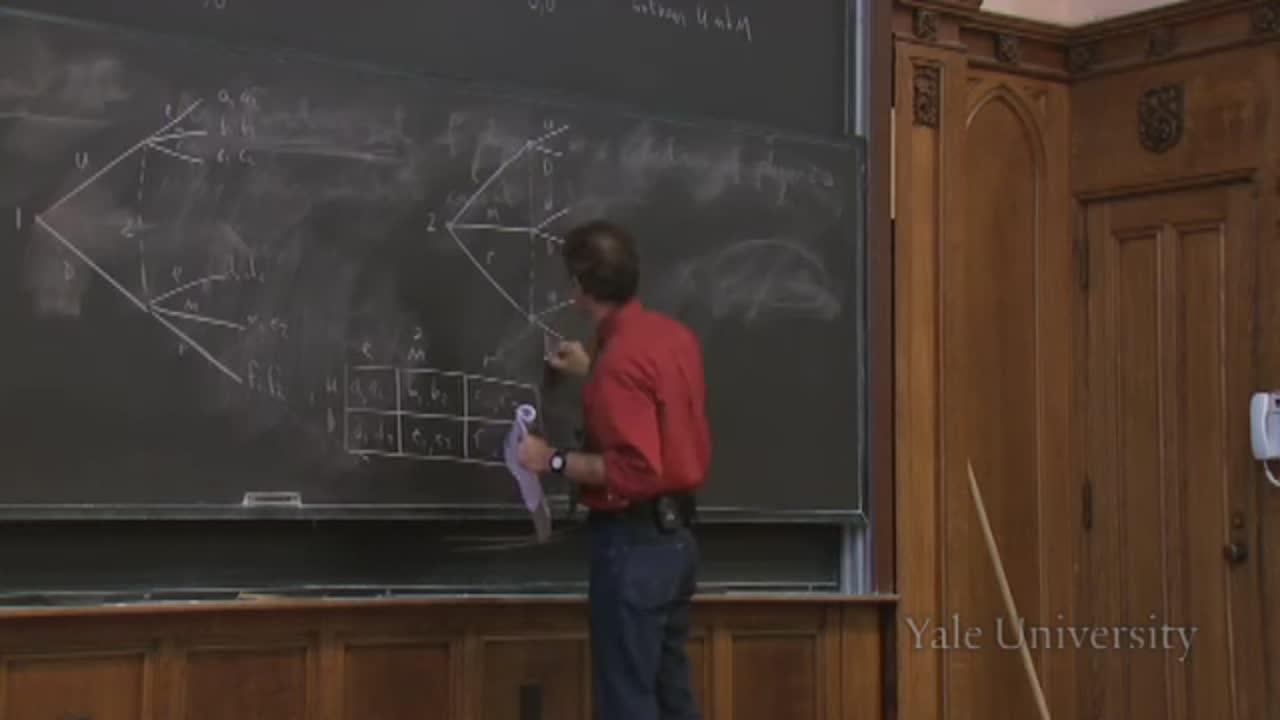
Lecture 3 - Iterative Deletion and the Median-Voter Theorem
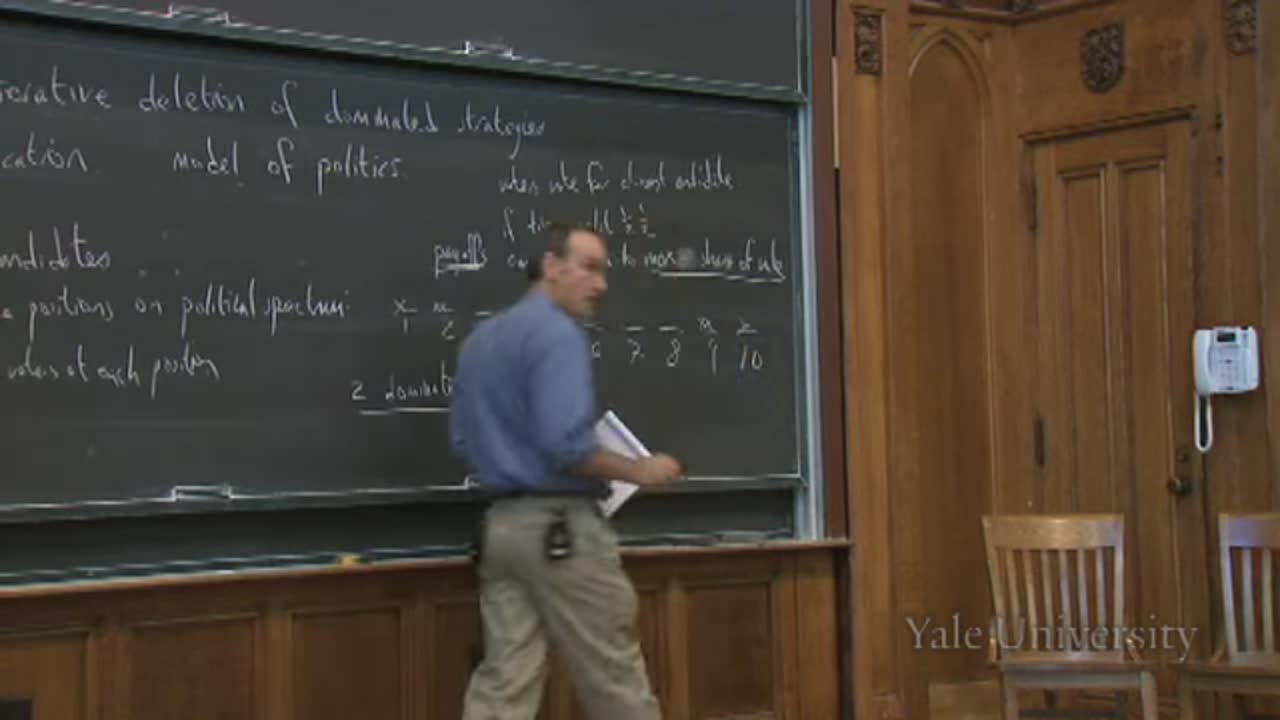
We apply the main idea from last time, iterative deletion of dominated strategies, to analyze an election where candidates can choose their policy positions. We then consider how good is this classic model as a description of the real political process, and how we might build on it to improve it. Toward the end of the class, we introduce a new idea to get us beyond iterative deletion. We think about our beliefs about what the other player is going to do, and then ask what is the best strategy for us to choose given those beliefs?
📑 Lecture Chapters:
Iterative Deletion of Dominated Strategies: The Median Voter Theorem [00:00:00]
Iterative Deletion of Dominated Strategies: Problems with The Median Voter Theorem [00:27:25]
Iterative Deletion of Dominated Strategies: Robustness of The Median Voter Theorem [00:35:07]
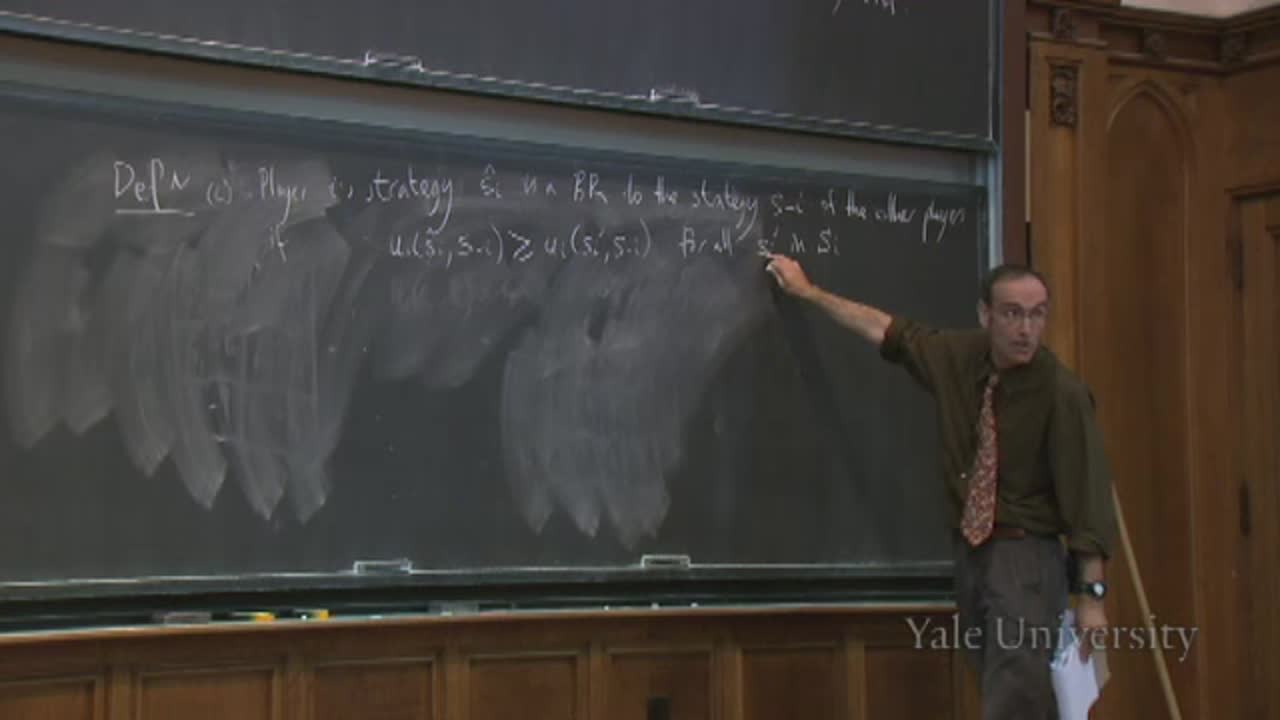
Best Response [00:39:11]
Source: Ben Polak, Game Theory (Yale University: Open Yale Courses). Licensed under CC BY-NC-SA 3.0.

Hypha Official
Watch what matters. Create what pays.
This course is an introduction to game theory and strategic thinking. Ideas such as dominance, backward induction, Nash equilibrium, evolutionary stability, commitment, credibility, asymmetric information, adverse selection, and signaling are discussed and applied to games played in class and to examples drawn from economics, politics, the movies, and elsewhere.
-
Lecture 1 - Introduction: Five First Lessons1:08:32 Free
-
-
-
-
-
Lecture 6 - Nash Equilibrium: Dating and Cournot1:12:05 Free
-
-
-
Lecture 9 - Mixed Strategies in Theory and Tennis1:12:52 Free
-
-
-
-
-
-
-
-
-
-
-
-
-
-
-